- Home|
- Advice|
- Tips
Why you don’t have to fish on gravel to catch carp
Adam Penning discusses why he finds fishing away from the going gravel spots is far better on busy waters!

by James Furness |
Updated on7th May 2026 at 10.27am
Follow Angling Times on Google
It seems to me that to be successful in the modern carp angling era, a vital prerequisite is to be able to adopt an ‘unpredictable’ style.
We are now at the stage where most carp anglers fish essentially from the same blueprint – that includes the type of rig, the type of hookbait and, largely, the type of spot too. Not only that, but because we are now firmly in the ‘information era’ many anglers are fishing the same spots as each other, due to concise measuring and mapping using wrap sticks – and, of course, this information is often shared.
Being different will pay off
When you look at this stark reality, it’s perhaps not hard to see why carp fishing is largely getting harder instead of easier. Of course the fish will, for reasons known only to themselves, have those times when they feed without caution and get caught in numbers, but generally this is not the case and they take a lot more catching.
Ask yourself this: if you want to entrap something that is doing its level best to prevent that from happening, are you best placed to copy what everyone else is doing, or to present something, somewhere, that is away from the norm and will perhaps catch our quarry off guard?
I’ve written lots about rigs and bait in relation to creating a trap that doesn't appear to be a trap, but the element of the spot and the actual substrate is not so widely discussed.
There are a few things to consider here – if the carp are in the process of creating a rock-hard clean spot, visiting it regularly and showing there consistently, then that is the place you need to put your bait. What’s more, on very weedy lakes it can be the case that the only clearings are similarly rock-hard, clean spots and, again, these are most likely to be the best places to position a bait if the carp are around.
However, there are also myriad examples of lakebeds that are not too weedy, with substrates consisting of a wide and varying range of silt and gravel, perhaps even clay and sand too. Most carp anglers look for the gravel and set their traps there – their thinking often not going much further than feeling for the ‘tap tap tap’ and popping the float up.
TRY THESE AWESOME CARP FISHING TIPS TO CATCH MORE THAN EVERYONE ELSE!
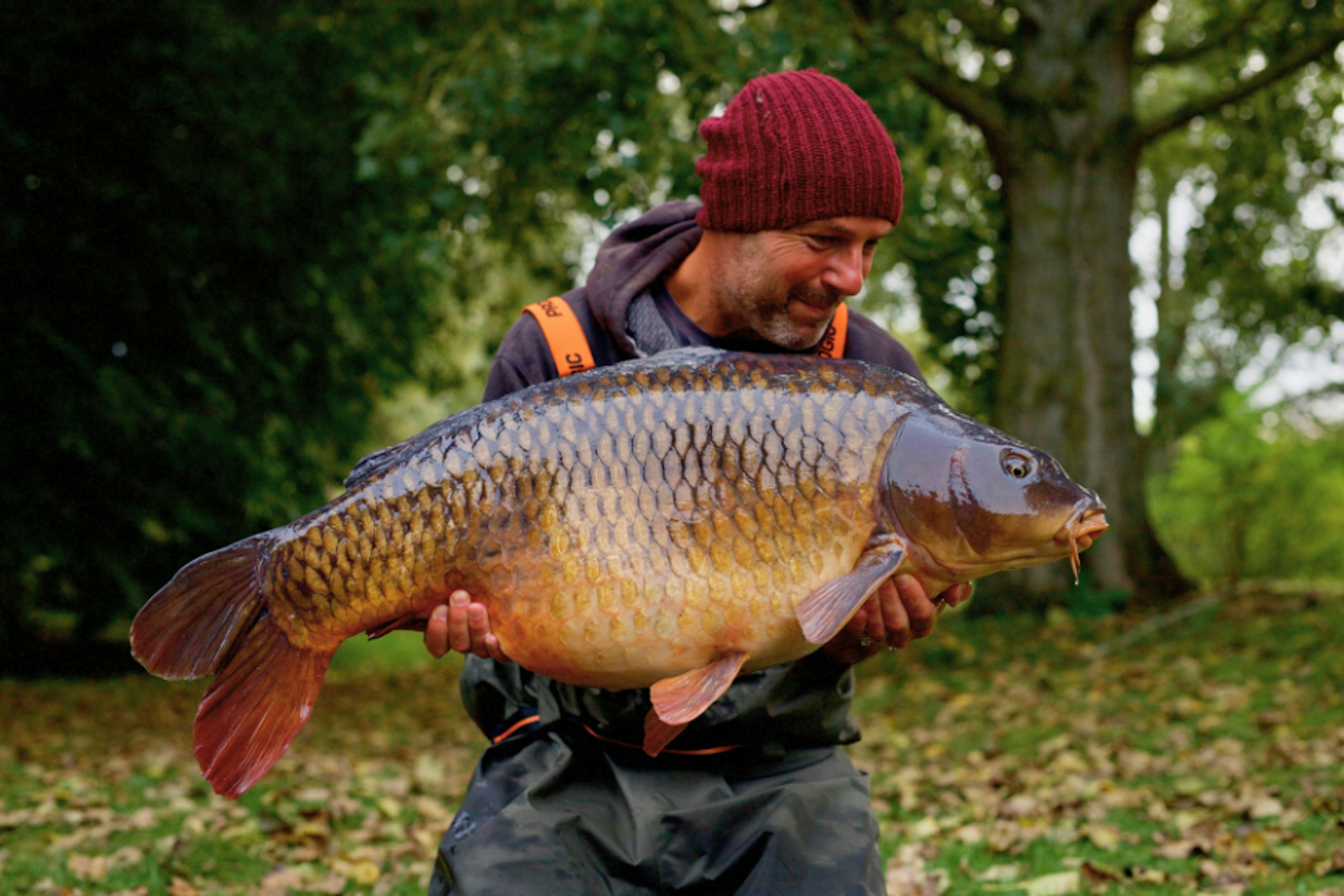
Another carp Adam caught off the 'going spots'
Natural feeding areas
I can think of many lakes in the past, including the famous Sandhurst, where the rock-hard spots were so predictably hammered, season in season out, that the carp became much more catchable on the softer, siltier areas simply because they treated baits placed on the blatantly clean stuff with suspicion and caution.
Thinking further into this – where would you expect the carp to find most of its natural food? Buried in the silt or nakedly exposed on clean gravel?
The anglers’ preoccupation with gravel is almost as old as carp fishing itself, and is largely down to the fact the good rig presentation is mostly assured. Additionally, super-clean spots are often polished for a reason. This is often down to repeated visits and cleaning by the carp. We shouldn't lose sight of this, as long as the spot is small and appears naturally made.
THE BEST CARP RODS WILL HELP YOU GET YOUR RIG IN THE PERFECT SPOT!
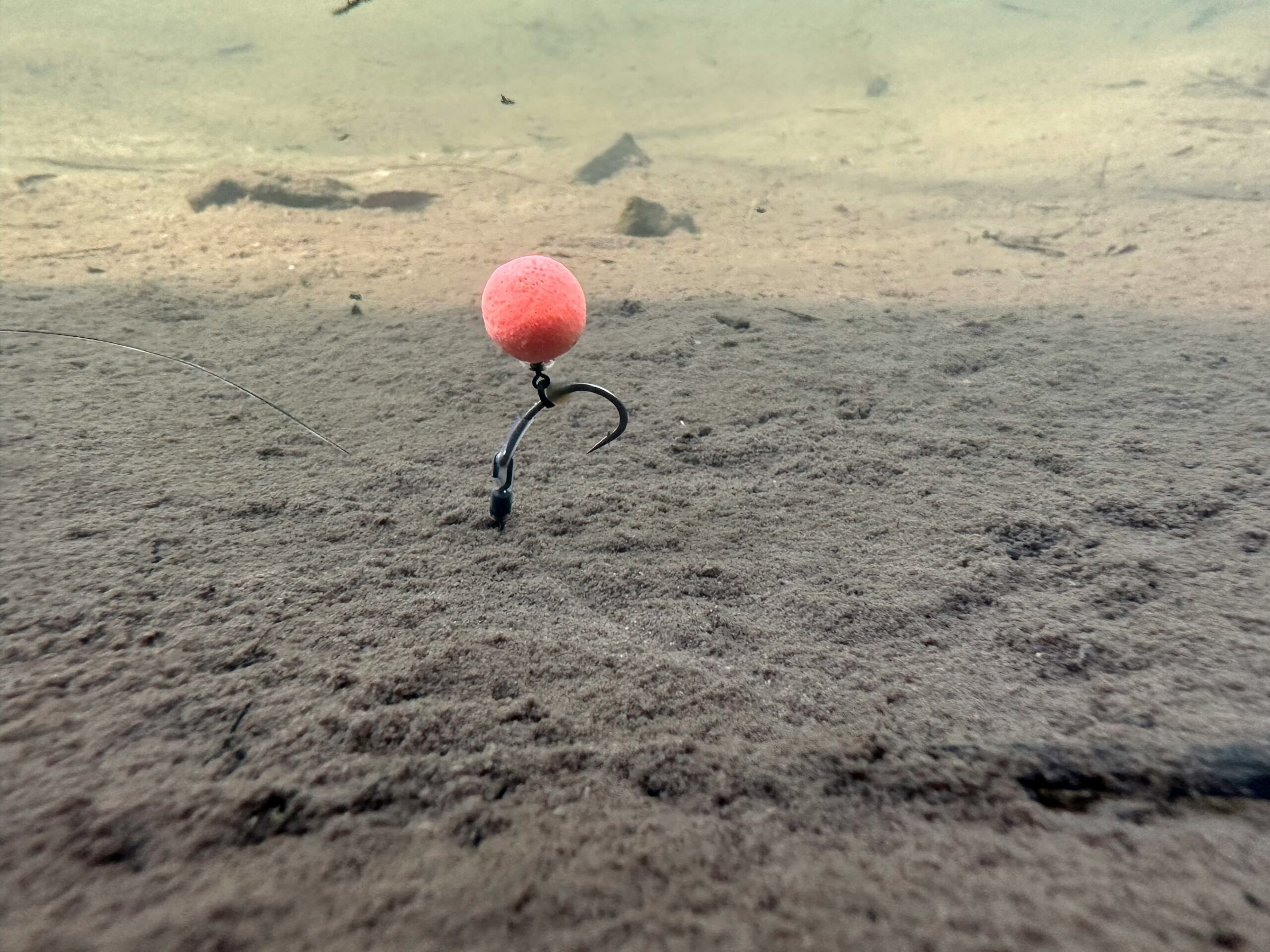
Don't get obsessed with gravel!
Avoid the gravel
If I am examining an area where I have seen lots of carp activity, then most of the time, all I am hoping to find is a clean bit of bottom where the lead slides without resistance.
Above that, I am keen to present my rig on whatever there is least of on the bottom. If the bottom is hard and clean gravel everywhere, but one area slides glassily smooth instead of tapping, then that is what I will focus on. Carp are curious creatures and, in their world, anything visually different to the surroundings is likely to be visited. Not only that, I know they will not be conditioned to finding danger in the silt. The silt will perfectly obscure my end tackle, and this is where the carp will be looking to find natural food too.
Seams are good – areas where two substrates meet – and these are often my favourite place to present a bait; the last few inches of clean silt before the tapping of shingle begins.
If I ever find a really blatant bit of gravel in the swim then I actively avoid it – a big bar or plateau comprising several yards of clean gravel will have likely been hammered by other carp anglers. I’d be much more likely to look at placing a bait down the side or back of the feature where the stones dissipate and silt or mud begins.
One last word on gravel – I’ve never found the really coarse, chunky stones to be any good. The type where the lead locks up sporadically and the flints are the size of your fist are not good areas to present on. If it is to be gravel, then I want the finest pea shingle I can locate, but if there is a choice of smooth silt or clay instead, then that is where I will be!
IF YOU ARE SPENDING A LOT OF TIME ON THE BANK, YOU'LL NEED A FISHING BIVVY!
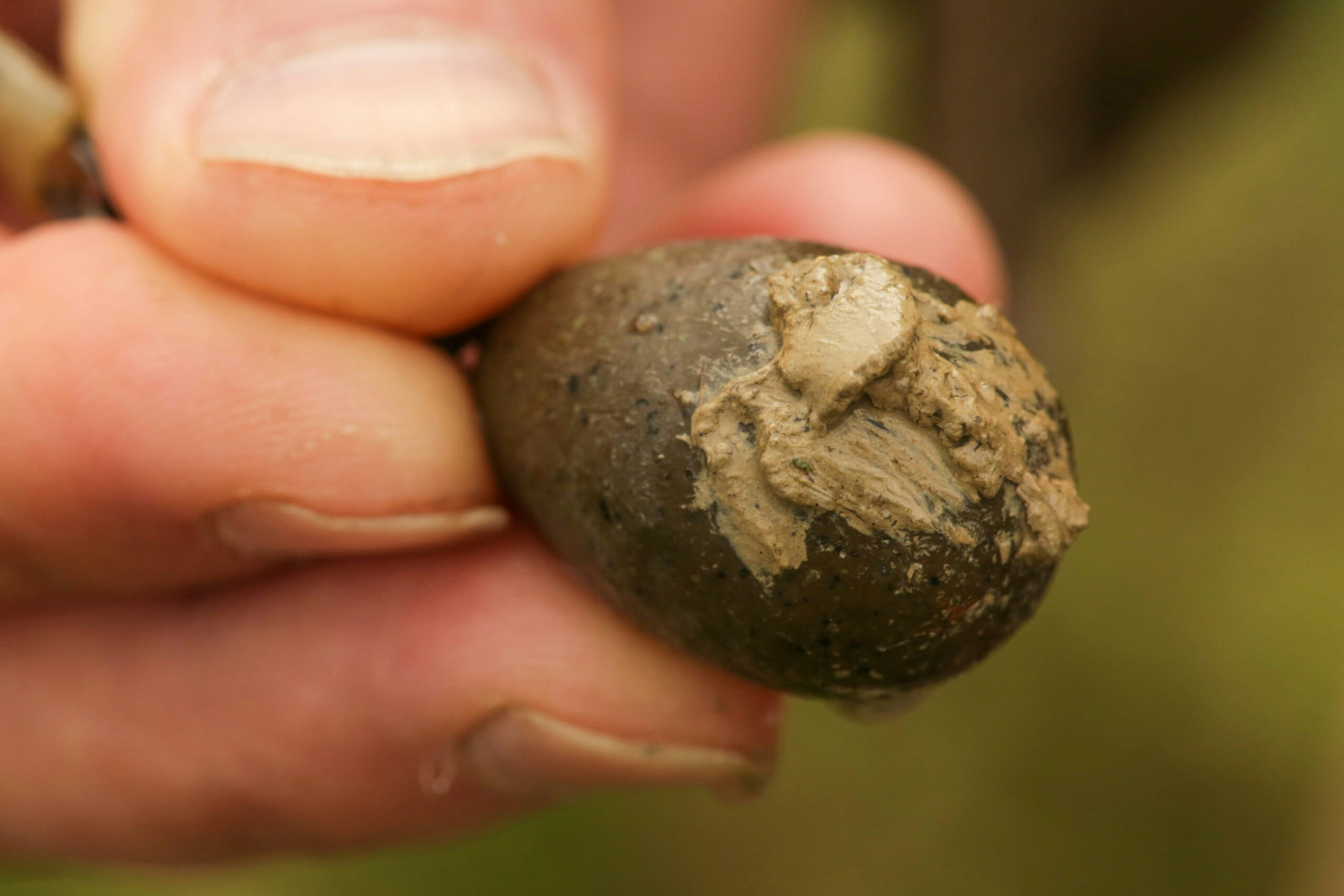
If you can find clay, that can be a magnet to carp!
Just so you know, we may receive a commission or other compensation from the links on this website - read why you should trust us