- Home|
- News|
- News Stories
Recovery of seal-ravaged river in full flow
Signs of fresh hope on the River Nene as catches of young barbel show the positive impact of a multi-agency approach
@Angling Times
by Angling Times |
Published on2nd October 2026 at 5.58pm
Follow Angling Times on Google
A river which had its fish stocks decimated by seals has reached a ‘monumental turning point’, as reports of small barbel highlight the effectiveness of the controlling club’s restoration efforts.
Last winter we reported that seals who became resident on the River Nene were safely returned to the coast after a lengthy campaign led by Peterborough and District Angling Association (P&DAA).
However, having been in the system since 2022, the seals’ lengthy presence resulted in a catastrophic decline in fish stocks, with surveys by the Environment Agency (EA) showing that vast swathes of the river were devoid of fish. It is estimated that 95 per cent of the adult fish population across much of the club’s stretches was wiped out.
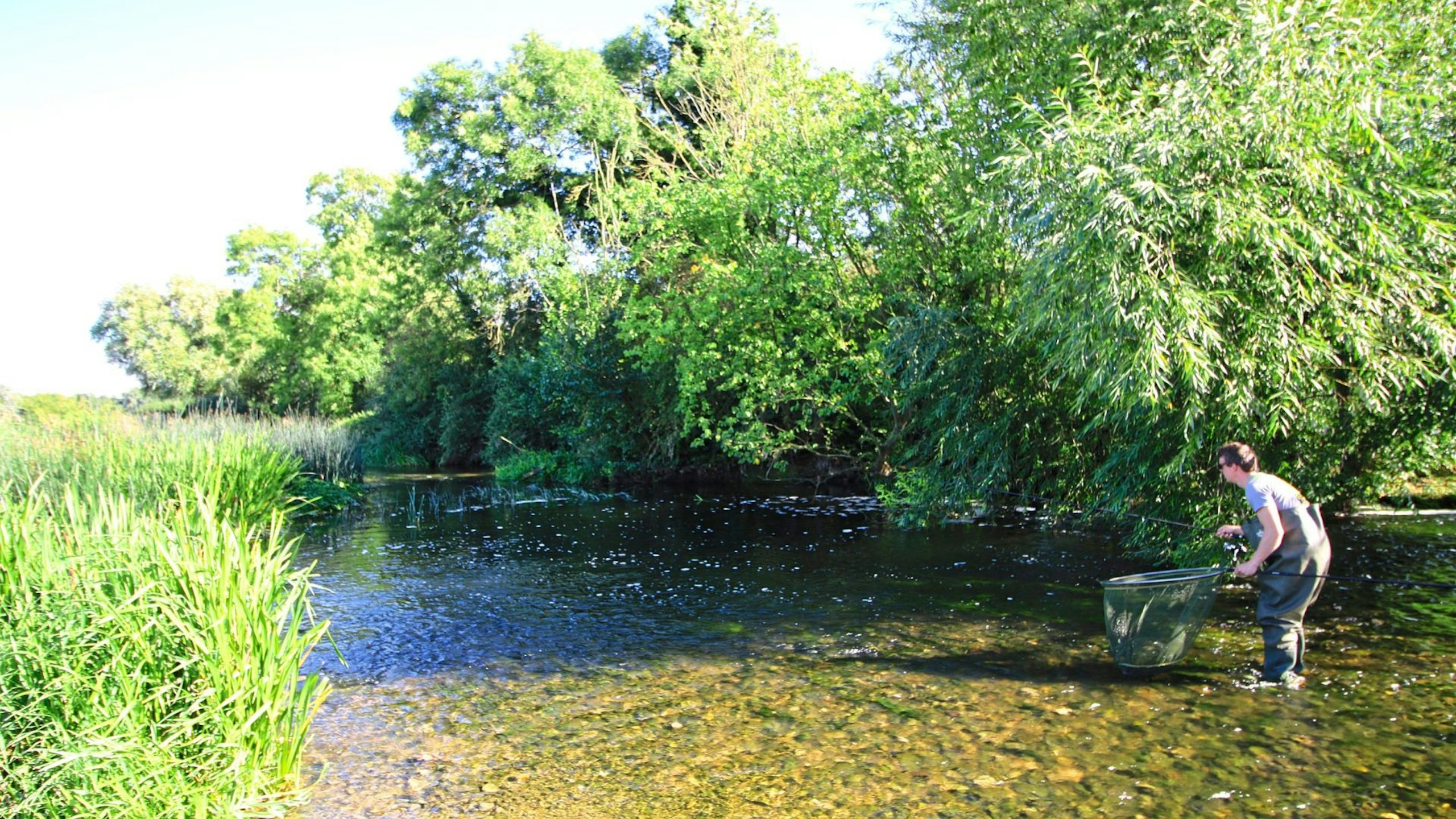
But P&DAA refused to let its waters fade away, and ever since, it has embarked on a volunteer-led drive of river restoration, focused not only on restocking, but on habitat restoration and predator deterrence, as Olly Rodgers, the club’s Head of Fisheries, revealed this week.
STOCKING THE RIGHT BARBEL
Whenever we see reports of the EA stocking fish on social media, the comments are flooded by anglers moaning that the fish they are stocking are ‘otter food’ or are going to be ‘washed away by floods’.
In the case of fry and young yearlings, these points are partly true, as surveys by organisations such as the EA show very high mortality rates – sometimes 90 per cent of a batch can be lost due to wash-outs or predation. As such, in a recovering river like the Nene, the survival of young barbel is a massive ecological hurdle.
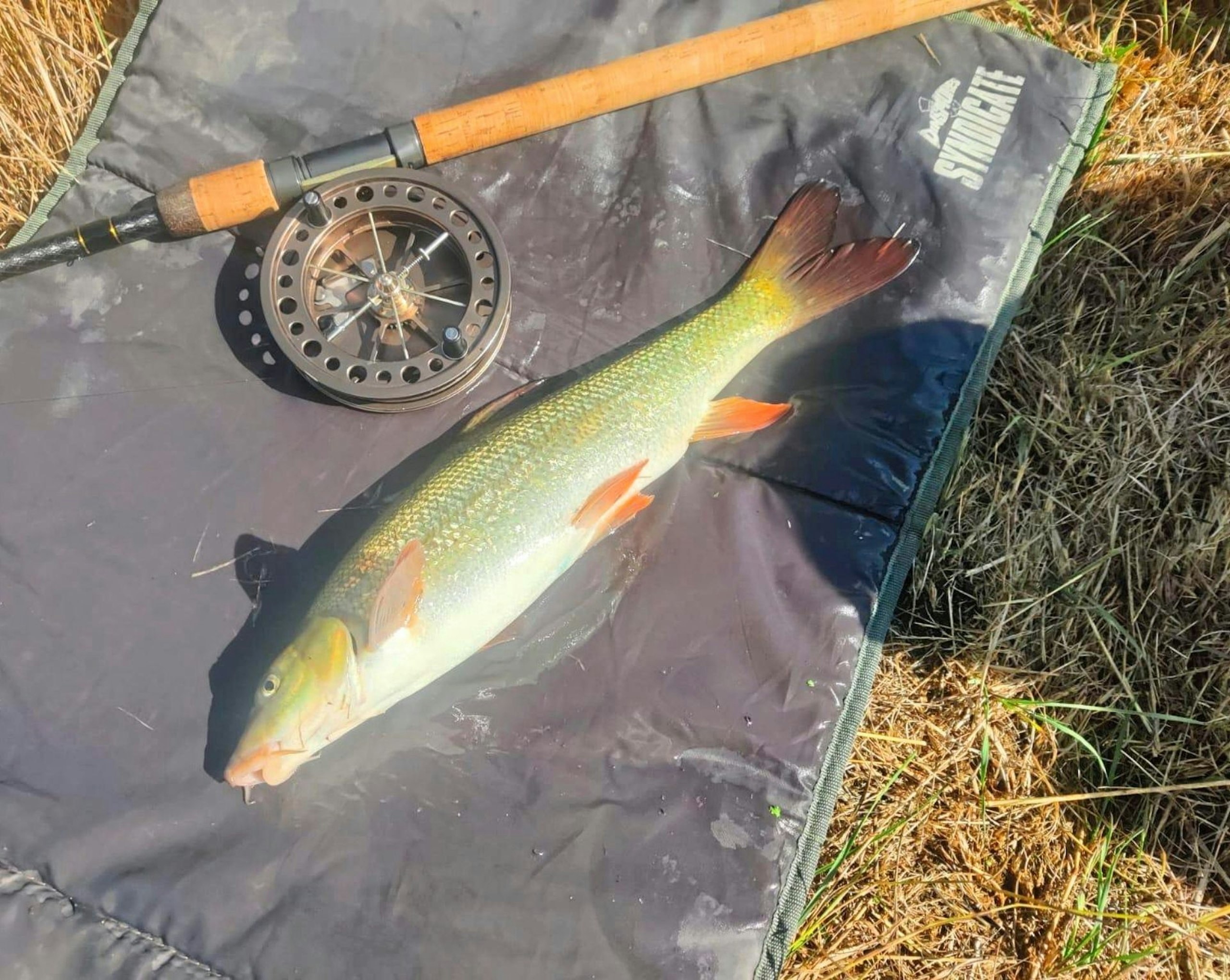
“To defy these odds, we stocked carefully conditioned juvenile barbel (around two years old) sourced from the EA’s Calverton Fish Farm,” Olly explained. “Each of these baby barbel received a harmless, special blue-dye mark on its ventral side prior to release, which allows us to track them and to directly monitor their growth, movement and survival rates over time.”
© Angling Times
ANGLER IMPACT
The club’s members are also helping to drive their recovery, simply by going fishing.
“To help us track these blue-marked barbel without harming them, our anglers have scaled down their tackle and methods,” Olly said. “By dropping down to smaller hooks, lighter lines and delicate baits, members are catching these juvenile fish and logging each fish with a blue ventral mark. This vital catch data gives us real-time proof that our young stock is growing, feeding and outsmarting predators.”
The club also has an interesting strategy to promote the fishing on its rivers again following tales of its demise at the hands of the seals.
“We have a ‘Team P&DAA’, whose job it is to highlight online the sport they are enjoying,” said club chairman, Rob Harris. “There were always going to be a few fish that evaded the seals, and alongside the smaller barbel, double-figure fish have been caught. As reports of these got out, more people have started fishing for them. So,more barbel are being caught, aswell as chub, perch, rudd and bream.”
HABITAT-FOCUSED VISION
Vital to the club’s restoration efforts is habitat work, which not only improves spawning grounds, but also offers protection from predators such as cormorants.
“To give these vulnerable young barbel every possible chance, we chose an aggressive, hands-on restoration strategy focused on non-lethal predator deterrence,” Olly revealed.
“By working with natural river processes, we have turned the Nene into a sanctuary for juvenile fish by carrying out widespread ‘hingeing’ (cutting part way through a tree so it can be bent yet continue to grow) and ‘pinning’ (securing trees directly to the bank or into the margins of a watercourse). This creates dense, submerged in-water tree cover that provides natural snags where baby barbel can safely hide away from aquatic and avian predators.
“We’ve also done large-scale aquatic planting to oxygenate the river, boost invertebrate food sources and provide shallow, tangled nursery zones for young fish.”
The club has also installed chestnut paling alongside reedbeds in the margins.
This woven fence allows small fish to shelter in the reeds while keeping any cormorants out – the club has watched small fish diving into it for cover on underwater films.
“We’re systematically cleaning gravel beds so that when young barbel reach maturity, they'll have pristine, silt-free sites to reproduce and sustain the population naturally," Olly said.
"The fact that our members are now catching and documenting these dyemarked baby barbel is the ultimate vindication of our collective efforts,” he added.
"It is a true mark of success, proving that with strategic vision, habitat-first restoration, and dedicated members, an angling club can bring a river back to life.”
Just so you know, we may receive a commission or other compensation from the links on this website - read why you should trust us