- Home|
- News|
- News Stories
The surprising reasons most fish swim in shoals
@Shutterstock / Rostislav Stefanek
by Freddie Sandford |
Published on12th December 2025 at 5.03pm
Follow Angling Times on Google
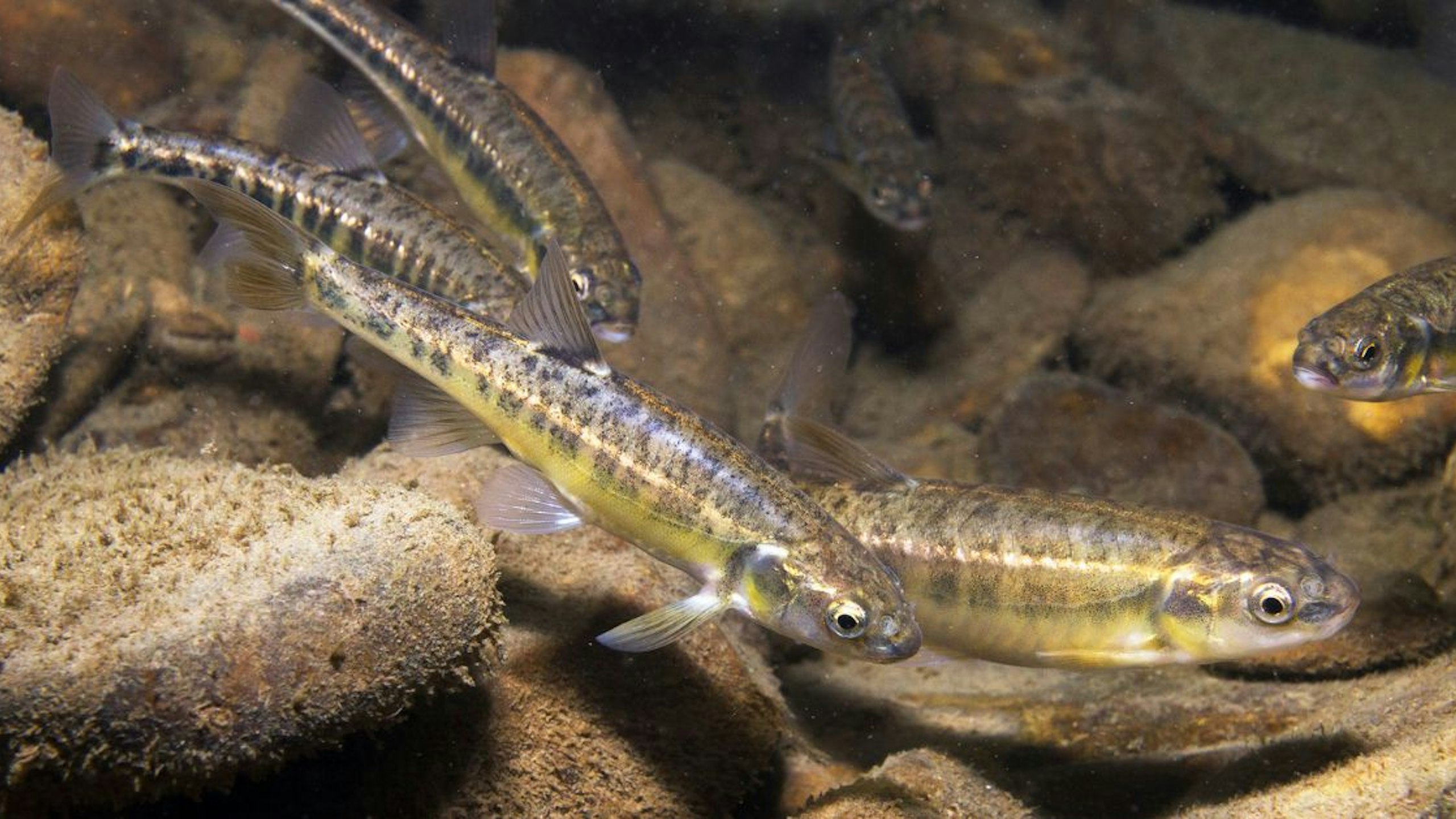
One aspect of the lives of coarse fish is shared by almost all species – they live in shoals. This gives fish a big advantage compared to living alone. It also means that if you get your location right, big catches are on the cards.
But why is living in a shoal so important? Perhaps the strongest and most commonly observed reason is that a large group helps to reduce the chances of any one individual becoming lunch for a passing predator. A shoal of fish contains many pairs of eyes, so that predators are spotted more quickly. While some of the fish might be preoccupied with feeding, others will be more vigilant, so there’s a very good chance that danger will be spotted early, enabling evasive action to be taken.
When a hungry pike approaches a shoal of roach, it will often be spotted by one of the fish, but how does it communicate this threat to its shoalmates? Most communication is via body language. Erect fins and an arched back are warning signals to shoalmates, along with jerky darting movements. The message rapidly spreads as it passes through the shoal from one fish to the next, taking only a fraction of a second to reach every one of them.
The same body language can also alert shoalmates to other dangers, from changes in current speed to perhaps even anglers’ hookbaits. It was long thought that fish communicated by releasing a ‘fright chemical’ from their skin if one of the shoal was attacked and eaten, or injured. However, after much research and testing the findings proved inconclusive, and so it is now thought that visual cues are the principal way in which most fish communicate.

Survival skills
When a predator launches an attack, being part of a shoal gives prey fish a much better chance of escaping being eaten. Usually, a pike will focus on one individual among a shoal – invariably one in poor condition or injured. However, as the shoal darts to avoid the pike, it’s difficult for the predator to stay focused on any one individual, and so the chances of escape are much higher. This is why predators tend to wait until a fish strays a little way from its shoalmates before striking, thereby giving them an easier target.
Fish living in strong currents, or which are constantly on the move, may gain some advantage by living in a close-knit community. Just as cyclists in a peloton face less air resistance by being sheltered by the riders in front, fish in a shoal experience less water resistance than when alone. To gain the maximum advantage from this shading effect, fish must remain close. Being within a couple of body lengths of the next fish maximises the advantage. Fish that live in slow flowing waters do not need to shoal quite so tightly and tend to be about four to five body lengths apart.
Some species form vast shoals, containing many thousands of individuals. Historically, roach have been found in mega-shoals in some large river systems, particularly in Ireland, with each shoal stretching hundreds of metres. These vast aggregations are particularly common in spring when the fish migrate to the preferred spawning areas.
Do fish switch shoals?
Shoals are not always made up of the same fish, and intermingling does occur. Groups of fish will constantly break away from the main shoal to perhaps join another passing shoal, or head off on their own. So members of a shoal can be constantly changing, some fish spending their whole lives in the same group, others constantly mixing with new fish. Shoal size can vary from just a handful of individuals in large fish such as carp and barbel, to many thousands for smaller species, such as minnow and bleak. Generally, the smaller the fish, the more individuals there will be in a shoal, giving them more protection from predators.
Fish tend to shoal only with individuals of their own species, but how do they know what species they are? It’s believed that newly hatched fish learn to recognise others that hatch close by, and begin to shoal within a few hours. As the fish develop, imprinting becomes stronger until they only shoal with similar fish. Experiments show that it’s possible to fool the young fish into thinking they are a different species by separating them from their own siblings and keeping them in sight of a different one.
Patrolling for food
Living in a large shoal means that there are many mouths to be fed. When food is abundant, this is not a problem, but when food is scarce it can mean there is not enough to go around. A large shoal might also quickly eat all the easily available food in an area to such an extent that it is no longer worth feeding there. Radio tracking has shown that fish such as bream, which live in large shoals, often follow a patrol route that connects areas where they have previously found abundant food – particularly bloodworm. Along the route fish will sample available food, but will only stop to feed where the density of these tiny invertebrates is high. This can mean that a shoal may have to move several kilometres each day to find enough food, but the cost of moving is far outweighed by the survival benefits of living in a shoal.
Shoaling behaviour is a great example of how working cooperatively can benefit all individuals and give them a better chance of survival. From escaping predators to locating food, working together is a great advantage.
Enjoying this article?
Subscribe to Angling Times for expert fishing tips, tackle reviews, and the latest angling news delivered straight to your door. Whether you're into coarse, carp, or match fishing, we’ve got the stories, advice and inspiration to keep you hooked.
Click here to see our latest subscription offers!

Just so you know, we may receive a commission or other compensation from the links on this website - read why you should trust us